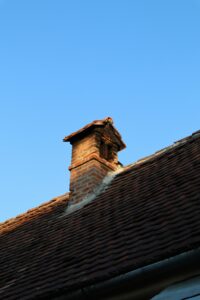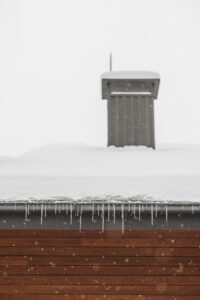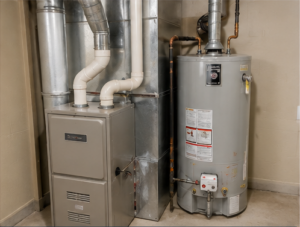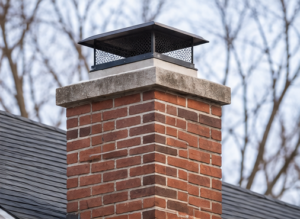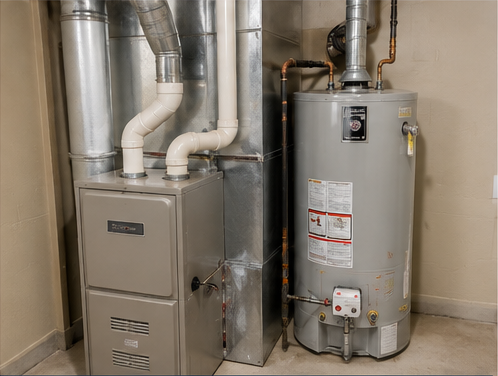
A furnace replacement can improve comfort and efficiency, but it may also change how your chimney works—especially when the furnace and water heater share the same masonry flue.
Many older homes were built with a furnace and water heater venting into one chimney. The warm exhaust from both appliances helped create upward draft. If the old furnace is replaced with a high-efficiency model that vents directly outdoors, the water heater may be left venting into a flue that is now too large or too cold for its exhaust.
This situation is sometimes called an “orphaned” water heater.
Why Flue Size Matters
A chimney needs enough warmth and airflow to carry combustion gases safely outside. When a small water heater vents alone into a large masonry flue, the exhaust may cool before it reaches the top.
Cool exhaust can condense inside the chimney. That moisture may combine with combustion byproducts and contribute to corrosion, damaged clay tiles, deteriorating mortar, or staining. Poor draft can also increase the risk that exhaust gases spill back into the home.
Signs the Venting System Needs Attention
Contact a qualified professional if you notice:
- Moisture or rust near the water-heater vent connector
- Crumbling clay-tile fragments near the chimney base
- White staining or deterioration on chimney masonry
- Soot or discoloration near the draft hood
- Unusual odors when the water heater operates
- A carbon-monoxide alarm
Never ignore a carbon-monoxide alarm. Move everyone outside and contact emergency services or the gas utility from a safe location.
When Is a Chimney Liner Needed?
A properly sized metal liner may be recommended when the existing flue is damaged, unlined, oversized, or incompatible with the connected appliance. The liner creates a protected pathway for exhaust and helps the venting system draft as designed.
The correct solution depends on the water heater, furnace or boiler, chimney height, flue condition, connector layout, and local code requirements. A liner should be selected and installed based on an on-site evaluation—not a rule of thumb.
Plan the HVAC and Chimney Work Together
Before replacing a furnace, ask how the change will affect every appliance connected to the chimney. Coordinating the HVAC contractor and chimney professional can prevent venting problems from being discovered after the new equipment is installed.
Chimney Doctors inspects and relines furnace, boiler, and water-heater chimneys throughout the Twin Cities. Call 952-697-3280 or book online to have your appliance venting evaluated.